
Accountability Lab is a global translocal network that makes governance work for people by supporting active citizens, responsible leaders and accountable institutions. Our goal is a world in which resources are used wisely, decisions benefit everyone fairly, and people lead secure lives.
Accountability Lab is a global translocal network that makes governance work for people by supporting active citizens, responsible leaders and accountable institutions. Our goal is a world in which resources are used wisely, decisions benefit everyone fairly, and people lead secure lives.
WHAT WE DO
Accountability Lab’s flagship training program for young change-makers to build sustainable, effective tools for change.
A global campaign powered by citizens in search of exemplary government officials.
A pioneering community feedback and dialogue platform to ensure accountability in the development process.
Supportive, impactful member networks and co-working spaces for small and big nonprofits.
A conscious music campaign supporting musicians who advocate for greater representation, participation and accountability.
Channelling civil society voices into high-level decision-making at the C20, G20, and the Open Government Partnership for stronger accountability and open government.


NETWORK LABS
STAFF
PARTICIPANTS
STAFF
GLOBAL PROGRAMS
PARTICIPANTS
HOW WE’RE BUILDING A TRANSLOCAL NETWORK
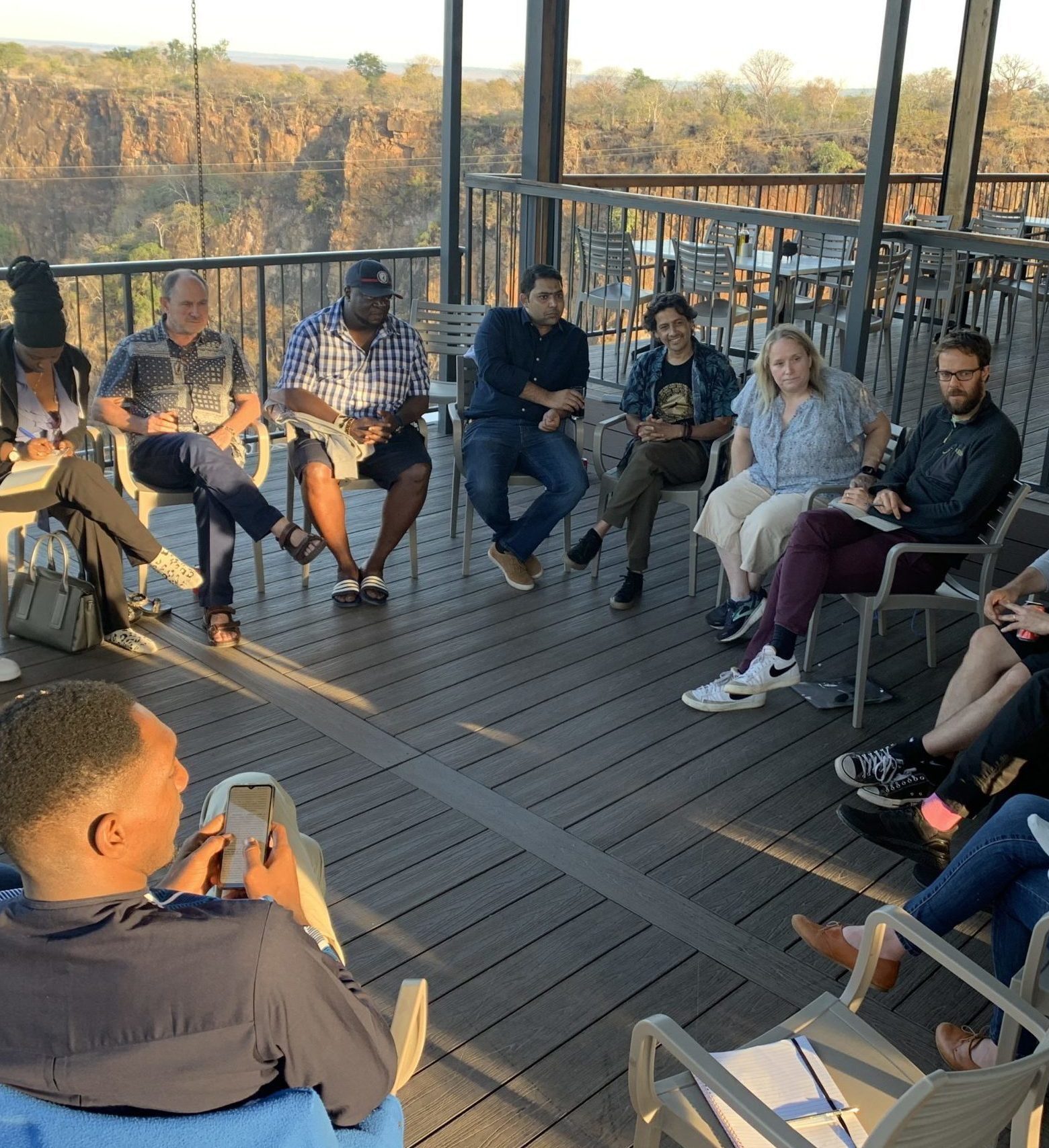
HOW WE’RE BUILDING A TRANSLOCAL NETWORK
LATEST NEWS
WHAT’S HAPPENING

We’re excited to have collaborated on this new white paper about the future of the DRG space with our incredible Non-Resident Fellow, Florencia Guerzovich, and the The Diplomatic Courier - https://www.diplomaticourier.com/posts/one-year-after-aid-freeze-donors-supporting-drg
💡 We’d ...love to hear your thoughts.


Meet @karinjalexander, our Senior Non-Resident Fellow.🎉
A political economist and development professional, Karin brings expertise in political economy analysis, adaptive strategic frameworks, and building politically smart research and implementation teams.
She has worked ...extensively in complex, fragile, and transitional contexts, advancing inclusive approaches that support marginalized voices and drive collaborative change.
We’re excited to have her insights strengthening our work.
Meet Karin Alexander, our Senior Non-Resident Fellow!🎉
A political economist and development professional, Karin brings expertise in political economy analysis, adaptive strategic frameworks, and building politically smart research and implementation teams.
She has worked ...extensively in complex, fragile, and transitional contexts, advancing inclusive approaches that support marginalized voices and drive collaborative change.
We’re excited to have her insights and experience strengthening our work!
What does it take for participation to build trust? We often assume that inviting people into decision-making is enough. In reality, meaningful participation needs much more.
In her latest blog, our Senior Non-Resident Fellow Soheila Comninos speaks with Josh Lerner of People Powered to ...unpack what makes participatory democracy truly work. The conversation breaks down not just what participatory democracy is, but when it builds trust and why design, communication, and intent matter so much.
Here are 3 takeaways that stood out to us:
▶️ Participation isn’t consultation: Trust grows when people have real influence over decisions, not just a seat at the table.
▶️Trust must be earned, not assumed: Declining trust isn’t always negative, it can reflect real failures and signal the need for change.
▶️Bad participation can do harm: Tokenistic or poorly designed processes can erode trust.
📖 Read the full conversation at the link in our bio.
#AccountabilityLab #ParticipatoryDemocracy #CivicEngagement #Governance
What does it take for participation to build trust? We often assume that inviting people into decision-making is enough. In reality, meaningful participation needs much more.
In her latest blog, our Senior Non-Resident Fellow Soheila Comninos speaks with Josh Lerner of People Powered to ...unpack what makes participatory democracy truly work. The conversation breaks down not just what participatory democracy is, but when it builds trust and why design, communication, and intent matter so much.
Here are five takeaways that stood out to us:
▶️ Participation isn’t consultation: Trust grows when people have real influence over decisions, not just a seat at the table.
▶️Trust must be earned, not assumed: Declining trust isn’t always negative, it can reflect real failures and signal the need for change.
▶️Follow-through matters: Trust is built through clear decisions, timely action, and honest communication, even about limitations.
▶️Bad participation can do harm: Tokenistic or poorly designed processes can erode trust.
▶️Design for relevance and inclusion: Participation works best when it connects to people’s lived realities and priorities.
📖 Read the full conversation and see what stands out to you:
https://bit.ly/4sXj2bl
#AccountabilityLab #ParticipatoryDemocracy #CivicEngagement #Governance

In my consultations on global democracy over the past year, people repeatedly pointed to mistrust in institutions, a disconnect between elites and...
accountabilitylab.org📑 How are AI-enabled surveillance systems shaping the future of cities across Africa?
A new report from the Institute of Development Studies, 'Smart City Surveillance in Africa: Mapping Chinese AI Surveillance Across 11 Countries', examines the growing expansion of AI-enabled ...surveillance technologies – including facial recognition systems, CCTV networks, and vehicle-tracking tools – as part of smart city initiatives across the continent.
Co-authored by Odeh Friday, Country Director of @accountlabng, the research maps how these technologies are being introduced across 11 African countries, and explores the implications for public oversight, digital rights, transparency, and accountability as digital infrastructure becomes more embedded in public life.
🔗 Read the full publication via the link in our bio.
#Governance #Accountability #DigitalRights #CivicTech #Africa #Transparency


📑 How are AI-enabled surveillance systems shaping the future of cities across Africa?
A new report from the Institute of Development Studies, 'Smart City Surveillance in Africa: Mapping Chinese AI Surveillance Across 11 Countries', examines the growing expansion of AI-enabled ...surveillance technologies – including facial recognition systems, CCTV networks, and vehicle-tracking tools – as part of smart city initiatives across the continent.
Co-authored by Odeh Friday, Country Director of Accountability Lab Nigeria, the research maps how these technologies are being introduced across 11 African countries, and explores the implications for public oversight, digital rights, transparency, and accountability as digital infrastructure becomes more embedded in public life.
🔗 Read the full publication: https://bit.ly/3N6wY3z
#Governance #Accountability #DigitalRights #CivicTech #Africa #Transparency

🗳️ Elections across Africa are moments of both democratic possibility and democratic pressure.
Ahead of the Global Democracy Coalition Africa Regional Forum 2026, civic leaders came together to discuss how young people across the continent are navigating this critical moment – ...mobilizing communities, confronting digital repression, and strengthening democratic accountability.
Speakers included Mcdonald Lewanika (Accountability Lab East and Southern Africa - ALESA , Alice Kabunda Kampengele (Restless Development), Elvis Sitati (Uamuzi Foundation), Koketso Moeti (amandla.mobi), and Nathaniel Mong’are (One Smart Star Kenya Ltd).
The discussion highlighted how youth-led civic actors are engaging in voter education, election observation, digital advocacy, and grassroots accountability efforts, even as civic space narrows and digital threats such as disinformation, surveillance, and internet shutdowns intensify during electoral periods.
One message was clear: democracy does not begin or end on election day. From documenting governance failures to mobilizing communities online and offline, young civic leaders across Africa are helping strengthen accountability throughout the electoral cycle.
🔗 Read the full blog: https://bit.ly/47CHjuT
🎥 Watch the video: https://bit.ly/4sMLOuT
#Democracy #YouthParticipation #Accountability #CivicSpace #Africa #DigitalRights

🗳️ Elections across Africa are moments of both democratic possibility and democratic pressure.
Ahead of the Global Democracy Coalition Africa Regional Forum 2026, civic leaders came together to discuss how young people across the continent are navigating this critical moment – ...mobilizing communities, confronting digital repression, and strengthening democratic accountability.
Speakers included @lewanikamcdonald (@accountlabalesa), Alice Kabunda Kampengele (@restlessdevelopment), @sheekwekwe (@uamuziorg), and Koketso Moeti (amandla.mobi), and @nathaniel.mongare (One Smart Star Kenya Ltd).
The discussion highlighted how youth-led civic actors are engaging in voter education, election observation, digital advocacy, and grassroots accountability efforts, even as civic space narrows and digital threats such as disinformation, surveillance, and internet shutdowns intensify during electoral periods.
One message was clear: democracy does not begin or end on election day. From documenting governance failures to mobilizing communities online and offline, young civic leaders across Africa are helping strengthen accountability throughout the electoral cycle.
🔗 Read the full blog: https://bit.ly/47CHjuT
🎥 Watch the video: https://bit.ly/4sMLOuT
#Democracy #YouthParticipation #Accountability #CivicSpace #Africa #DigitalRights